
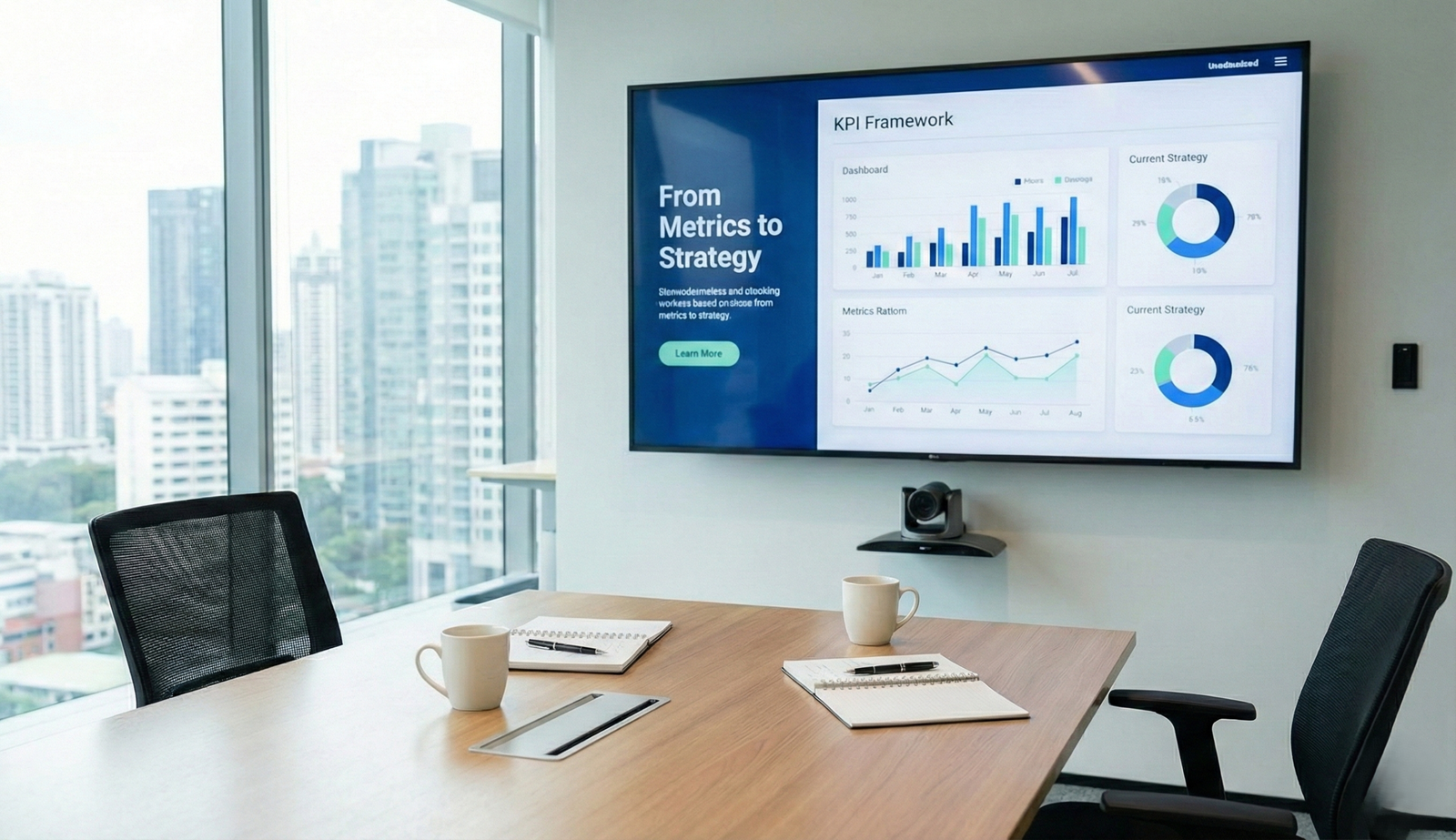
Why Most Quality KPIs Miss the Mark
Organizations track dozens of quality metrics — defects, audits, incidents, rework — yet executives still struggle to answer one fundamental question:
Is quality improving business performance, or just generating reports?
The issue is not measurement. It is design.
Many Quality KPIs are operationally correct but strategically irrelevant. They remain disconnected from business priorities, financial outcomes, and executive decision-making. As a result, quality discussions stay tactical instead of strategic.
To elevate quality to the executive level, KPIs must be intentionally designed to align with strategy, risk, and value creation.
1. Start With Business Objectives — Not Metrics
Effective Quality KPIs begin with clarity on why quality matters to the organization.
Quality objectives should directly support enterprise goals such as:
- Margin protection and cost control
- Customer trust and delivery reliability
- Regulatory confidence and risk reduction
- Operational scalability and resilience
Examples of strategic quality objectives:
- Reduce Cost of Poor Quality (COPQ) to protect profitability
- Improve right-first-time delivery to support growth
- Strengthen audit readiness to reduce regulatory exposure
Only after these objectives are defined should KPIs be selected — ensuring every metric answers a strategic question.
2. Design a Balanced KPI Framework
A strong Quality KPI framework avoids narrow focus and provides a balanced executive view across four dimensions:
Financial & Value
- Cost of Poor Quality (COPQ)
- Cost of rework and nonconformance
- Cost avoidance through preventive actions
Operational Performance
- First Pass Yield (FPY)
- Defect trends by process or project phase
- Corrective action cycle time
Compliance & Risk
- Recurring audit findings
- On-time closure of nonconformities
- Risk mitigation effectiveness
Customer & Stakeholder
- Customer complaints and trends
- On-time and in-full delivery
- Stakeholder satisfaction indicators
This balance ensures quality is discussed as a business system, not a siloed function.
3. Combine Leading and Lagging Indicators
Executives need visibility into both what has happened and what is likely to happen next.
- Lagging indicators (COPQ, complaints, audit findings) provide accountability.
- Leading indicators (training coverage, process audits, early defect detection) enable prevention.
A mature KPI framework includes both — allowing leadership to manage risk proactively rather than reactively.
4. Establish Ownership and Governance
KPIs without accountability quickly lose impact.
Each KPI must have:
- A defined owner
- Clear performance thresholds
- Agreed escalation triggers
At the executive level, reviews should focus on trends, systemic causes, and decisions required, not just numerical updates. This is where KPIs shift from reporting tools to governance instruments.
5. Embed KPIs Into Executive Rhythm
Quality KPIs must appear where decisions are made:
- Executive dashboards
- Monthly performance reviews
- Management review meetings
- Strategic and risk forums
When quality metrics sit alongside financial and operational data, quality becomes part of how the business is run, not an afterthought.
Closing: Turning Quality Metrics Into Strategic Advantage
Designing effective Quality KPIs is not about measuring more — it is about measuring what matters.
When Quality KPIs are aligned with strategy, balanced across dimensions, governed effectively, and embedded into leadership routines, quality evolves from compliance to competitive advantage.
That is when metrics stop informing reports — and start driving decisions.